A Branch Centre of The Ramakrishna Order of India                                              

2009 Lectures | 2010 Lectures

Vedanta Society of Toronto                                                           Belur Math Logo


What is this disease? It is ignorance: ignorance of the real nature of our self and the real nature of the world. Knowledge of our true nature and the nature of the world is the cure for this disease. Meditation makes that knowledge accessible to us.
Our concept of ourselves and our identities are crucial factors in our life. What I hold to be true about myself will affect my actions, my words, my reactions to the words of others and so on. What I hold to be true about the world will also have a similar effect. Meditation helps us to question assumptions that we take for granted about ourselves and about the world.
If we try to locate our identity, we may begin with our body. If anyone touches my body, I will say that they touched me. But we know that the body is constantly changing. Cells are dying and new cells are replacing them. Moreover, if a person were to lose an arm or a leg, their body has changed but it is the same person. If a person grows their hair, again the body has changed, but we still say that it is the same person. As we grow up from childhood, to youth and to old age, the body undergoes many changes and yet we feel that it there is one and the same person whose body is changing. Thus, we cannot equate our identity with our body. This is easy enough to say, but meditation helps us to experience the truth of this.
Next, we might identify with our thoughts. But we quickly realize that thoughts are constantly changing and that there is a person who is witnessing all of these changing thoughts. Thus, we cannot equate ourselves with thoughts either. Again, this is easy to say but meditation helps us to experience its truth and to live accordingly.
If I am not the body, and I am not the mind, then what am I? Meditation helps each individual to discover their spiritual identity. We are spirit. Moreover, meditation helps each individual to live in the awareness of their spiritual identity.
In particular, we discover that there is no multiplicity of spirit. Thus, we discover our kinship, and even our identity, with all beings. This is why the spiritual teachers of the world are full of love for everyone. This is why they teach that we are all brothers and sisters. It is not a social nicety that they are preaching, but the truth.
The state of spiritual realization cannot be described in words, but it is felt that the walls that separate us from the universe are removed. The awareness of time and space is obliterated. Reaching this goal may be the work of a lifetime (or even several lifetimes!) We have to proceed step by step. The Gita says that one makes progress slowly and steadily ‘sanaih sanaih’. It also says that everything is revealed to us in time – ‘kalena atmani vindati’.
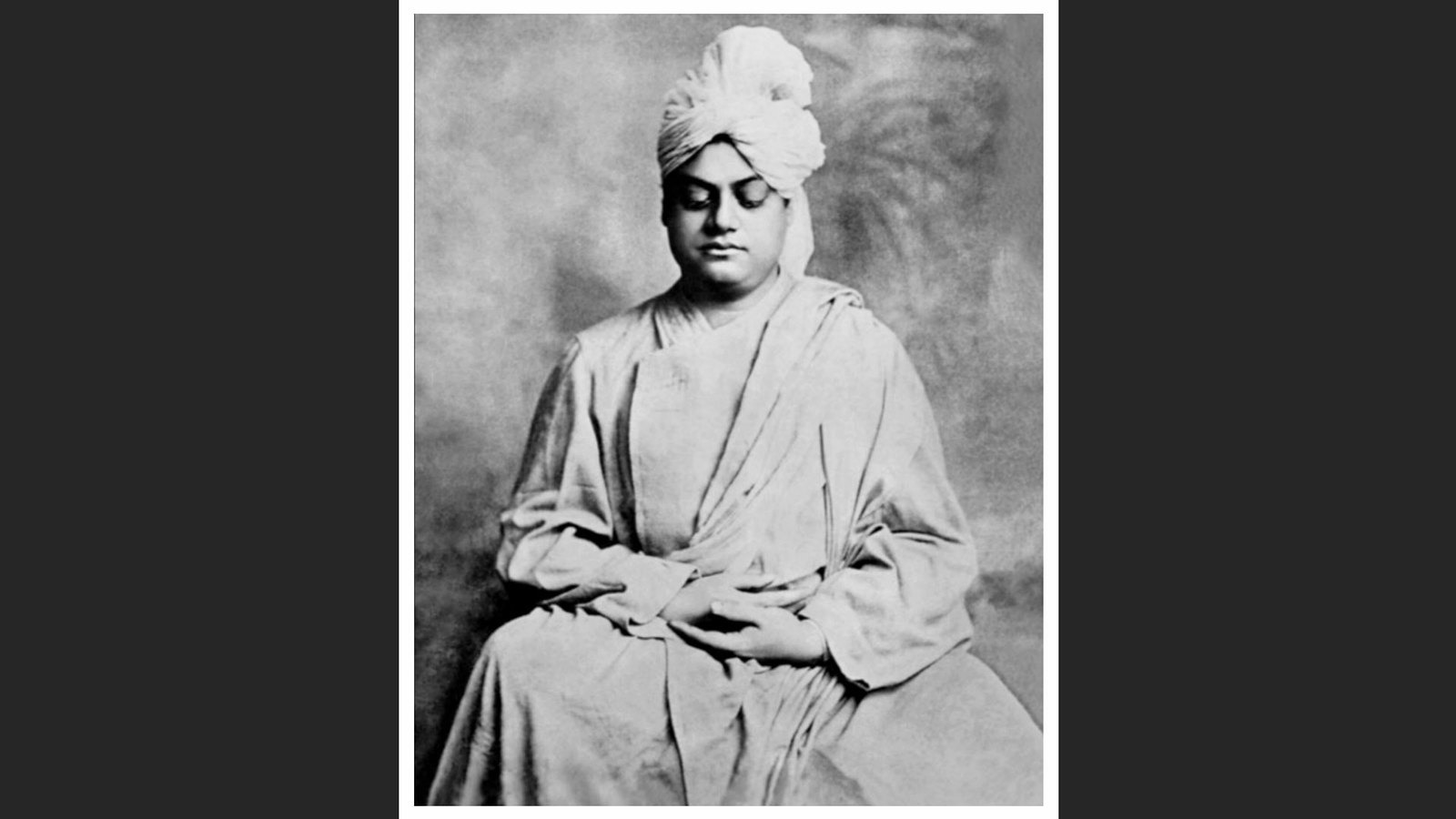
There is a strange and amusing incident in the life of Swami Vivekananda. When Sri Ramakrishna was at the Cossipore garden house, Narendra (the future Swami Vivekananda) repeatedly asked him for an experience of the highest state of realization. Soon afterwards, while Narendra was meditating, he felt the presence of a bright light behind his head and he lost outer consciousness. After a long time, he regained awareness of the world around him, but could not feel his body. He cried out ‘where is my body?’ This was reported to Sri Ramakrishna who simply said ‘let him stay in that state for awhile; he has pestered me enough for it!’ Soon afterwards, Narendra regained his normal awareness. We have to proceed step by step so that the body and mind are prepared to handle spiritual experience. If we somehow get spiritual awareness without the preparation, we may have this kind of strange experience. This is why the Gita says that one should proceed slowly and that one will understand everything for oneself in the fullness of time.
It is very interesting that spiritual teachers use the word ‘realization’. One does not become something that one is not. The goal of meditation is to realize our spiritual identity. We do not become spiritual. We are spirit now, only we are not aware of it. We are pure now, only we are not aware of it. Meditation does not make us purer. It makes us aware of our nascent purity.
The disciplines of meditation help to remove the obstacles. Mostly, these obstacles arise from the body and the mind. This is why we may preface the practice of meditation with physical exercise to keep the body fit. These exercises and postures help the body to become a fit instrument for meditation. We also practice calming the mind so that thoughts do not obstruct our spiritual awareness. This is why the yoga sutras of Patanjali start with the aphorism ‘yoga chitta vritti nirodhah’ – yoga is the cessation of thought waves.
The question can be asked what happens ‘after’ spiritual realization. We experience a serenity of mind that is not disturbed by any external circumstance or happening. It is not that we will be ignorant of what is happening around us. We will know everything and understand everything. But we will not be disturbed by it. The Gita says ‘samatvam yoga ucyate’ – they say that equanimity is yoga.
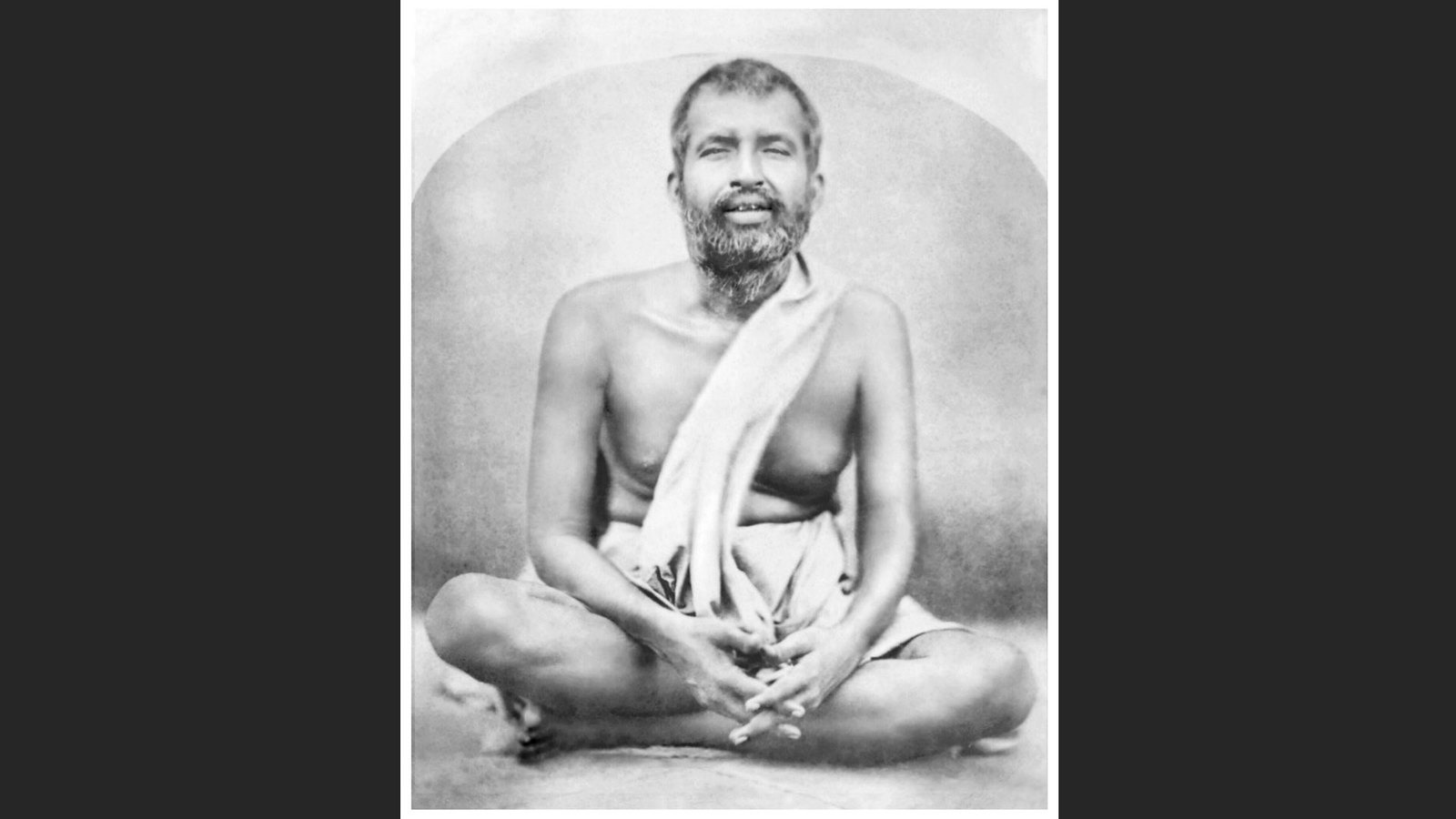
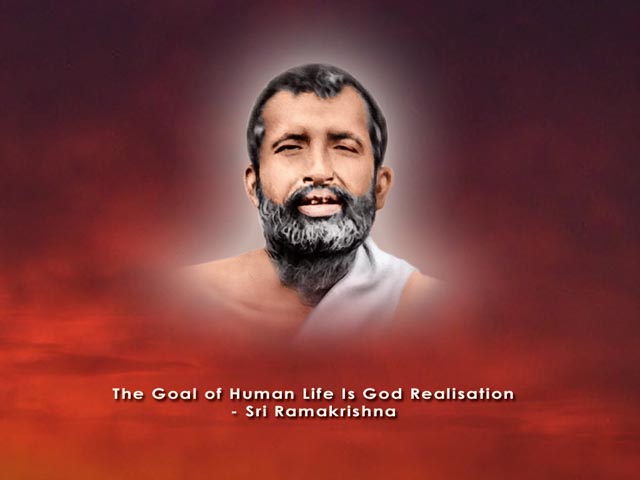
Moreover, this serenity and equanimity is not a ‘dry’ calmness. It is full of bliss and joy. There is a constant ‘spiritual enjoyment’. What is it that we enjoy? We enjoy contemplating, repeating, hearing and sharing with others the name of God. We enjoy the experience of the presence of God. This may be expressed mentally or physically. We know that in the life of Sri Ramakrishna, on occasions devotees would see an indrawn calm joy in which the Master was absorbed in samadhi. The joy he was experiencing would be evident in his facial expression. On other occasions, he would express that joy more physically by dancing and singing. It is said that he would dance ‘with the strength of a lion’.
Yet another aspect of this serenity and equanimity is that we are very concerned about the welfare of all beings. The Gita says that the realized soul rejoices in the well-being of all ‘sarva bhute hite ratah’. There is a self-dedication to the well-being of all.
 
Page 1 II Page 3
Contact Us | ©Copyright 2009 Vedanta Society of Toronto. All Rights Reserved.